
Can AI Detect Pet Health Problems From a Photo?
A pet photo can reveal more than a moment. Here is how ScanMyPet turns one photo into a guided care journey - noticing, understanding, and following up on what it finds.
 By ScanMyPet Team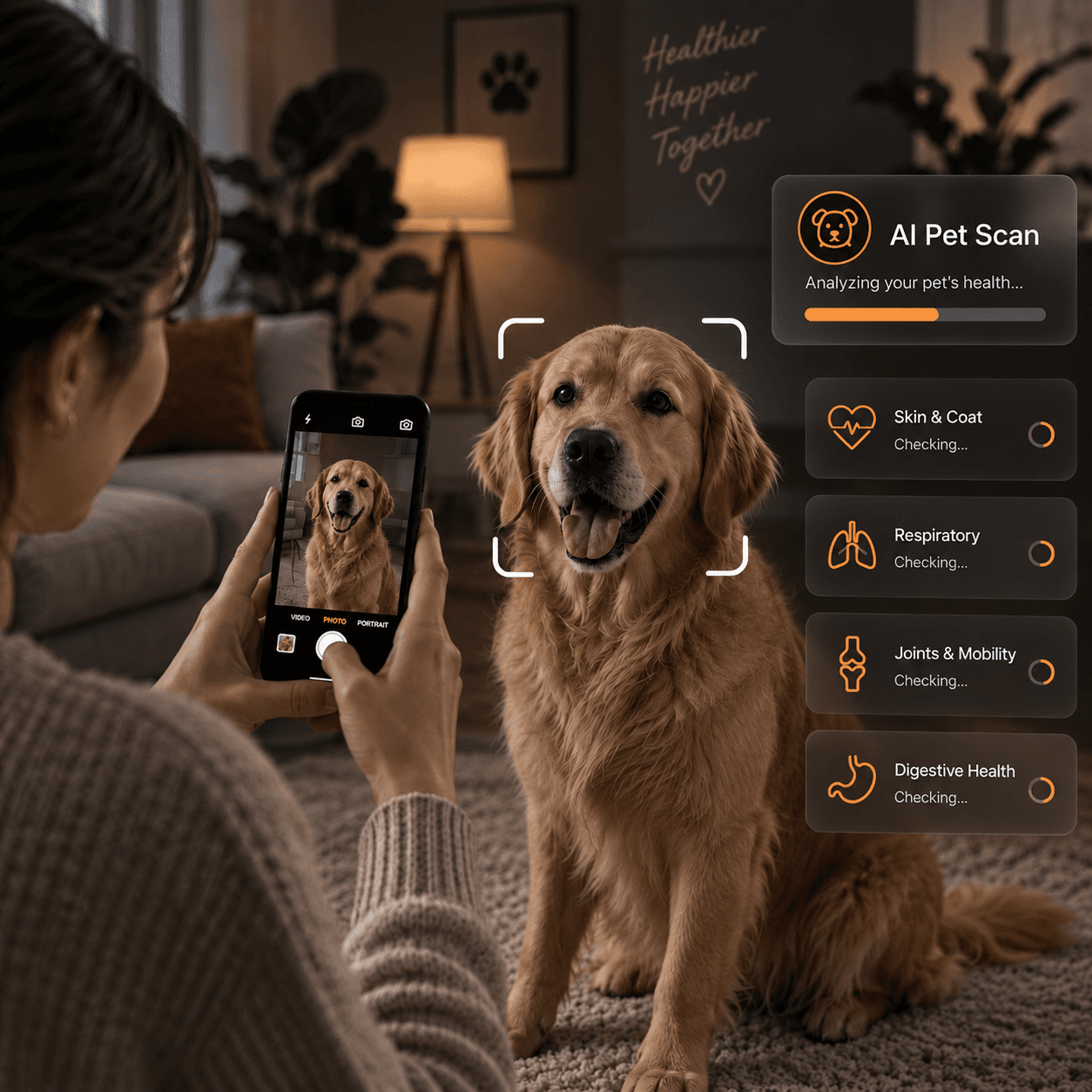
Pets cannot tell us that something feels different. They may scratch a little more, develop a patch of irritated skin, move differently, or simply look unlike themselves. The problem is that small changes are easy to miss.
ScanMyPet is designed around a simple idea: pet care should start with noticing what is happening, then helping you understand it, act on it, and remember what happens next.
That is why a scan is not the end of the experience. It is the beginning of a care journey.
What Can AI Actually See in a Pet Photo?
AI vision can examine visible features in a photograph and identify patterns that may deserve attention.
Depending on the photo, ScanMyPet can look at things such as:
- Visible skin irritation or redness
- Changes in coat or fur
- Swelling or unusual appearance
- Visible eye or ear concerns
- The location of a visible finding
- The apparent severity of what is visible
- Whether the finding looks suitable for monitoring
- Whether the situation may need prompt veterinary attention
A photo cannot reveal everything about an animal's health. AI cannot see internal problems simply because they are not visible in the image.
The purpose of the scan is therefore not to replace a veterinarian or make a definitive diagnosis. It is to help a pet parent notice visible signals and understand the appropriate next step.
The Scan Is the Starting Point
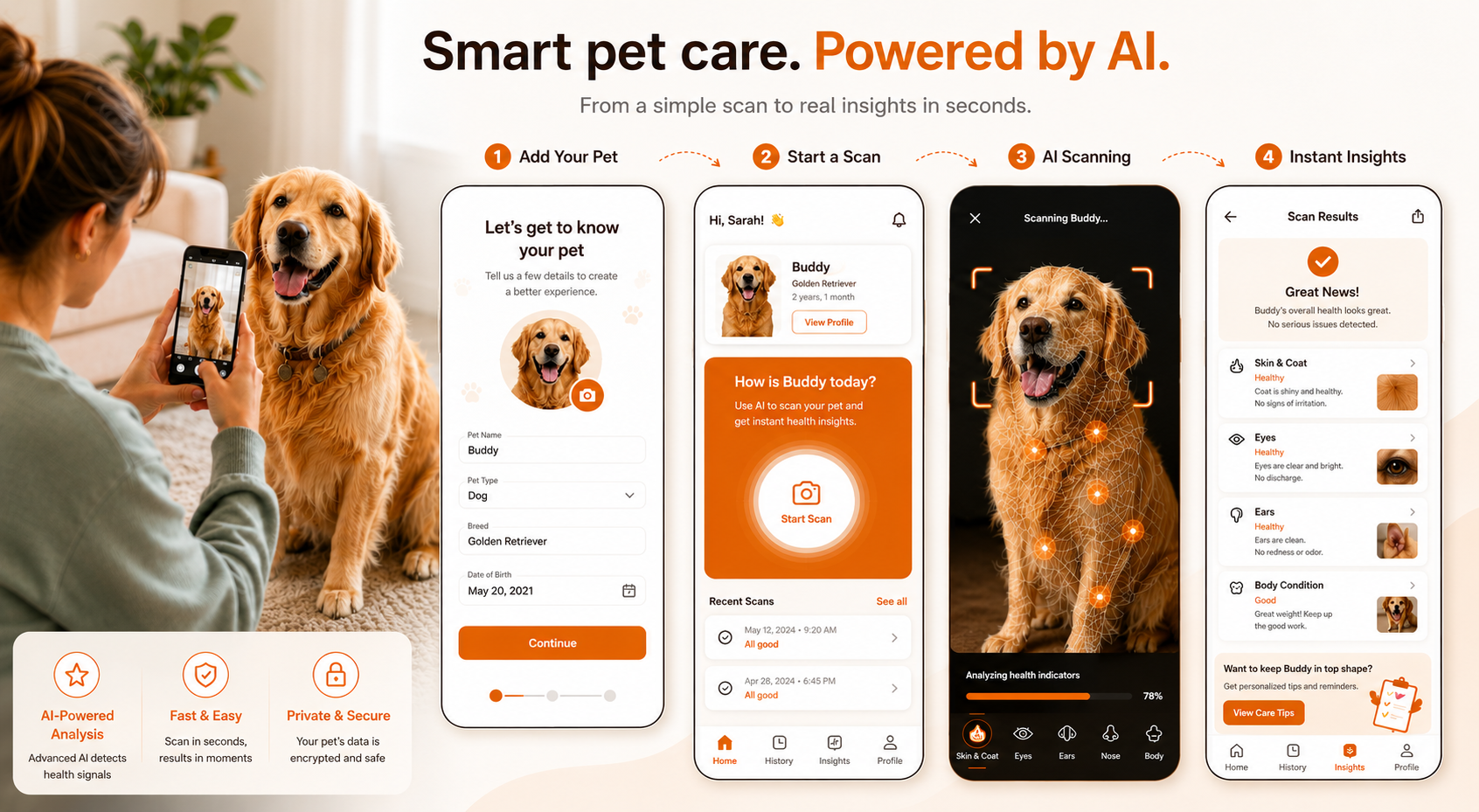
ScanMyPet begins with something familiar: take a photo of your pet.
There is no need to search through a long list of possible conditions before you begin. The AI examines the image and builds an initial understanding of what it can see. It considers:
- 1
What Is Visible
The system identifies visible findings or changes in the photographed area.
- 2
Where It Is
The location of the finding helps provide context for the result.
- 3
How Significant It Appears
The scan considers the apparent severity of the visible issue.
- 4
What Category It May Belong To
For example, a finding may relate to skin and coat, eyes, ears, or another visible area.
- 5
What Should Happen Next
The system considers whether the finding may be appropriate to monitor at home or whether professional veterinary attention may be appropriate.
This makes the scan useful even when you do not know exactly what you are looking at.
From a Result to a Care Journey
Traditional health apps often stop after giving you information.
ScanMyPet is designed to go one step further.
When a scan identifies a concern that can be monitored, the result can become the starting point for a guided care journey. Instead of simply saying, “Here is something you should watch,” the experience can help turn that concern into practical follow-up actions.
For example, a care journey might include:
- A recommended care action
- A reminder to complete the action
- Instructions for when to check again
- A request to photograph the same area again
- Notes about what changes to look for
- A record of completed care tasks
- Progress tracking over time
The goal is simple: make it easier to know what to do after the scan.
Why Follow-Up Matters
One photograph is a snapshot. A series of observations can tell a much better story.
If a visible skin concern is being monitored, for example, a pet parent may be able to rescan the same area later and compare the new result with the previous one. That creates context.
Instead of asking only, “Does this look unusual?” you can also ask:
- Is it changing?
- Is it improving?
- Is it staying the same?
- Has anything new appeared?
This is where AI becomes more useful as part of an ongoing care process rather than as a one-time image checker.
Your Pet's Care Plan
When a concern is suitable for monitoring, ScanMyPet can organize the next steps into a care plan.
The plan is designed around the actual concern rather than presenting a generic checklist. A pet parent may see simple actions such as:
- Give the recommended care.
- Check the affected area at the suggested time.
- Photograph the area again after a certain interval.
- Record an observation.
- Complete a follow-up scan.
Completed actions can be tracked so that the pet parent can see what has already been done and what still needs attention. This turns a health concern into something manageable: one small action at a time.
Rescan and Track the Change
The most important part of a monitoring journey is what happens after the first scan. A follow-up photo can be compared with the earlier observation to help surface meaningful changes.
For example, the system may help a pet parent notice:
- Reduced visible redness
- Changes in the size or appearance of an affected area
- A change in coat condition
- A concern that appears unchanged
- A concern that appears to be getting worse
The purpose is not to promise that a condition will improve in a specific number of days. Real pets do not follow a fixed timeline.
Instead, the value comes from giving pet parents a consistent way to observe what is happening and keep that information together.
When AI Should Not Be the Last Step
Not every situation should become a home-monitoring journey.
Some visible findings may warrant professional veterinary attention, particularly when they appear severe, rapidly worsening, painful, or otherwise concerning. In those situations, ScanMyPet is designed to help surface that the issue may need veterinary attention rather than encouraging a pet parent to rely on AI alone.
More Than a Photo Scanner
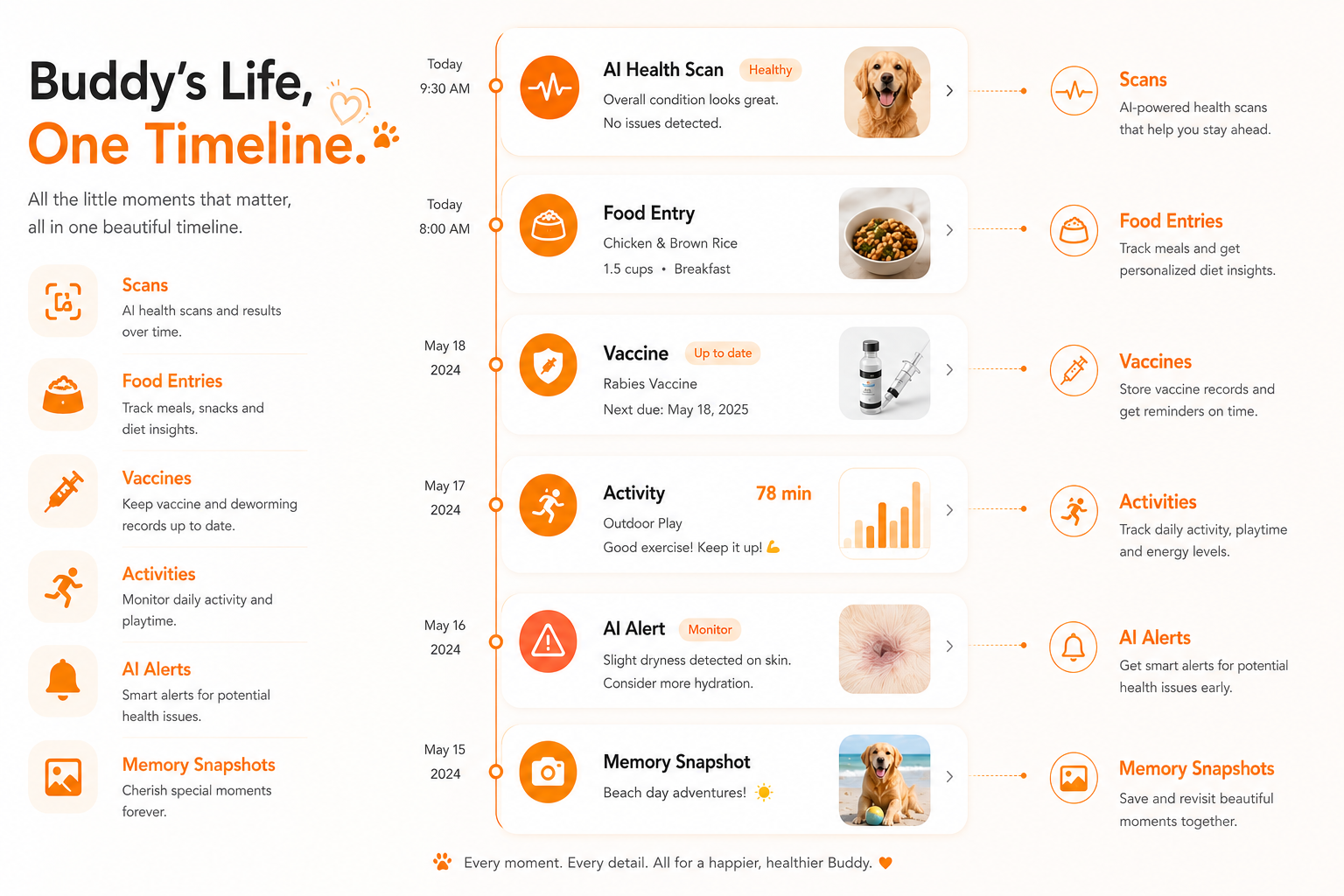
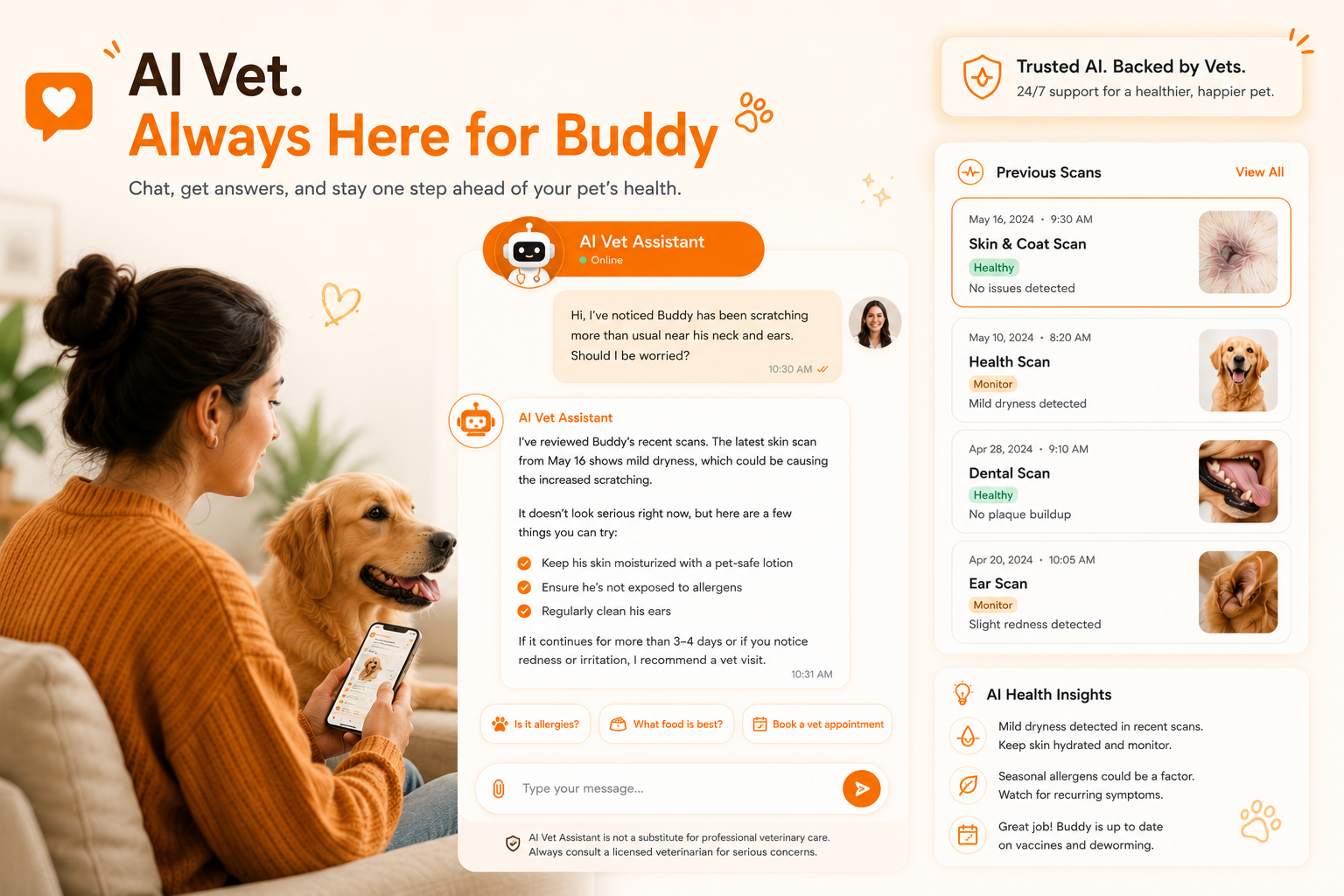
A pet's health story does not live in one photograph. Over time, important information can accumulate:
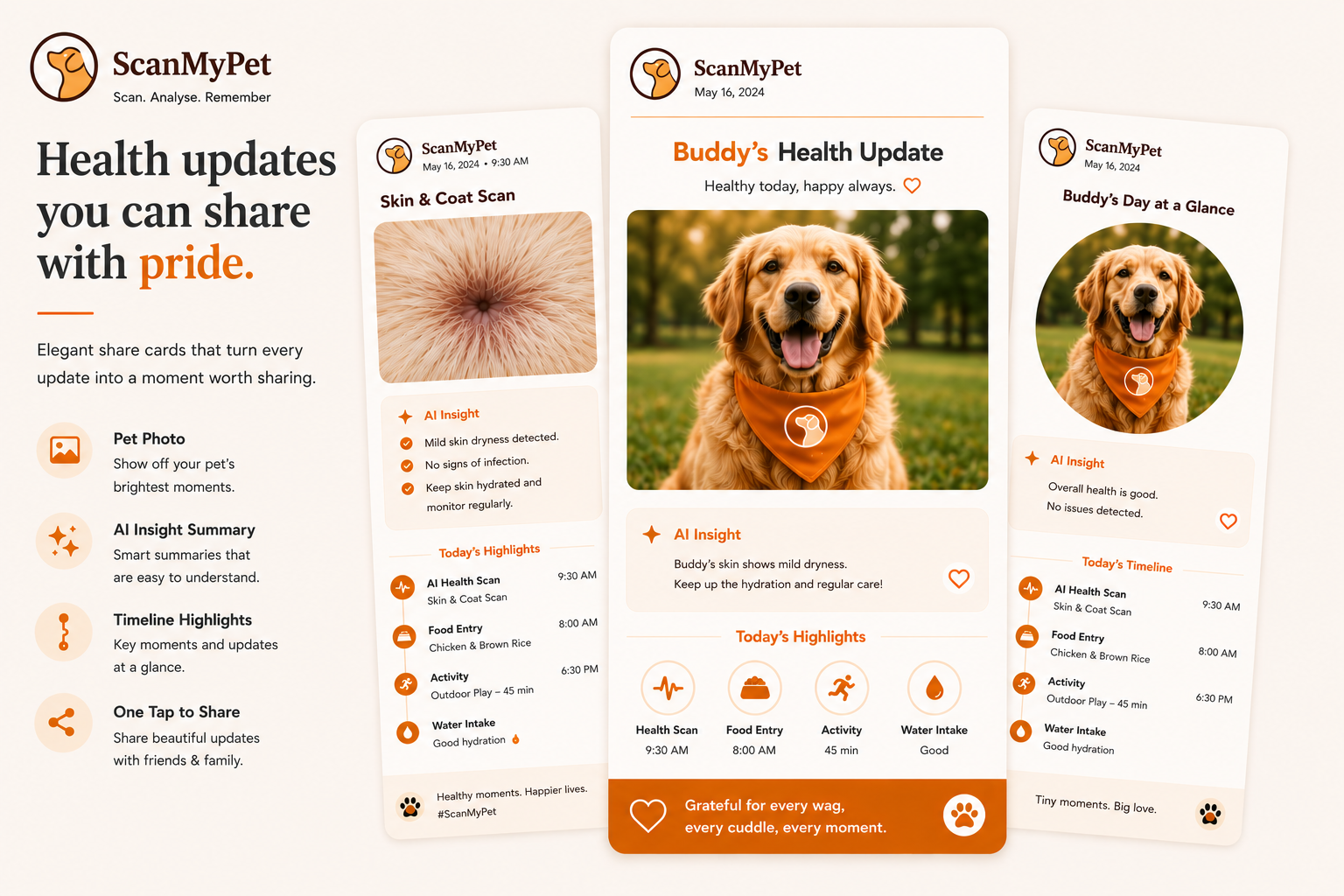
- Previous scans
- Care journeys
- Follow-up observations
- Activity changes
- Nutrition information
- Medical records
- Vet visits
- Vaccination information
- Notes and memories
ScanMyPet is designed to keep these pieces connected to the pet they belong to.
That means a future scan does not have to exist in isolation. Past information can provide context for understanding what has changed.
The AI Vet Team
Some questions cannot be answered by an image alone.
A pet parent may want to understand a symptom, ask about nutrition, discuss behavior, or make sense of something that has changed between scans. This is where the AI vet team fits into the workflow.
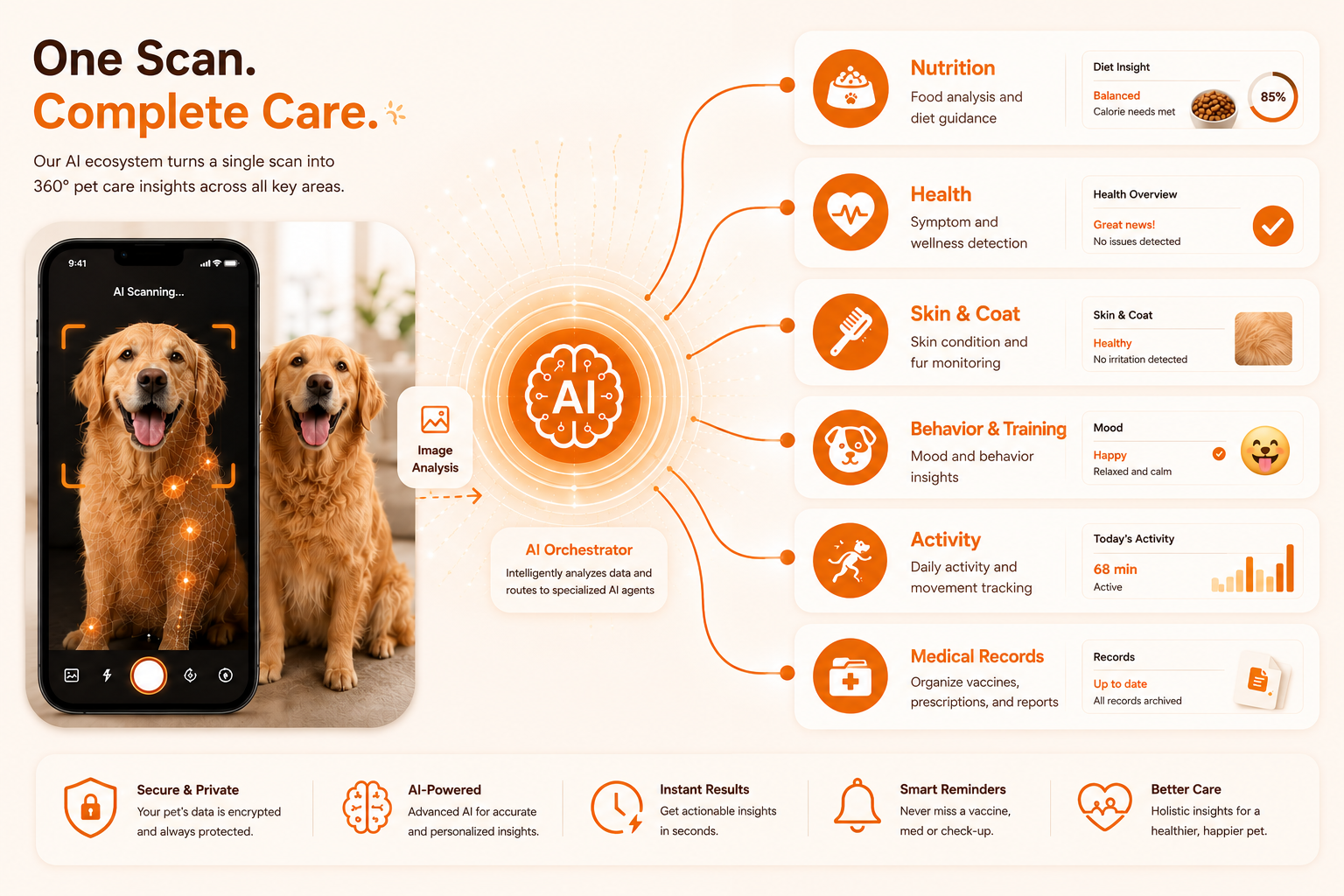
Different specialist AI systems can focus on different parts of pet wellbeing, including:
- Skin and coat
- Nutrition
- Health
- Behavior
- Activity
- Medical records
Rather than treating every question as the same problem, the system can use the relevant context from the pet's journey to provide more useful guidance.
The important distinction is that these AI systems provide informational support. They do not replace a licensed veterinarian.
The Bigger Idea: From Scanning to Continuous Care
The most useful role for AI in pet care may not be answering one question from one photo. It may be helping pet parents build a better habit of noticing, acting, checking again, and remembering. That creates a simple loop:
- 1
Scan
Capture what you are seeing.
- 2
Understand
AI identifies visible findings, context, severity, and possible next steps.
- 3
Care
If appropriate, turn the finding into a practical care journey.
- 4
Check Again
Follow up with observations or another scan.
- 5
Track
See how things change over time.
- 6
Escalate
If something appears concerning, know when veterinary attention may be appropriate.
- 7
Remember
Keep the journey connected to your pet's ongoing history.
This is the difference between an AI image scanner and an AI-powered pet care experience.
AI Can Help You Notice More, But It Cannot Replace Your Vet
AI pet health technology is powerful because it can help organize information and highlight visible patterns that might otherwise be overlooked.
But there are important limits.
A photograph cannot provide a complete medical examination. AI can make mistakes. A visible finding may have many possible causes, and some serious conditions may have no obvious external signs.
ScanMyPet should therefore be used as a support tool for awareness, monitoring, organization, and informed next steps, not as a diagnosis or substitute for professional veterinary care.
A better pet health experience should not end when an AI produces a result. It should help you understand what you saw, decide what to do next, keep track of the journey, and remember what happened.
That is the idea behind ScanMyPet.
One photo can start the journey. The care, follow-up, and memory are what make it useful over time.
Start Your Pet's Care Journey
One photo can start the journey with ScanMyPet, helping you notice, understand, act, and remember, every step of the way.
Start Your Pet's Care JourneyScanMyPet provides AI-assisted pet wellness insights for informational and educational purposes. It does not provide veterinary diagnosis, treatment, or emergency care. AI-generated results may be inaccurate or incomplete and should not replace professional veterinary evaluation. If your pet is sick, injured, in distress, or you are concerned about its health, contact a licensed veterinarian.