
Pet Parents Need One Place to Understand, Track, and Organize Their Pet’s Health Information
Learn why organized pet health records matter and how a pet health tracker can help you understand changes, track wellness, and keep your pet’s health history in one place.
 By ScanMyPet Team
If you are a pet parent, you probably know more about your pet than you realize. You know how excited they get when they hear the food packet open. You know when they are having a lazy day. You notice when they scratch a little more than usual, eat less than normal, sleep differently, or suddenly become unusually quiet.
But there is one thing many pet parents don’t have:
A simple, organized picture of their pet’s health over time.
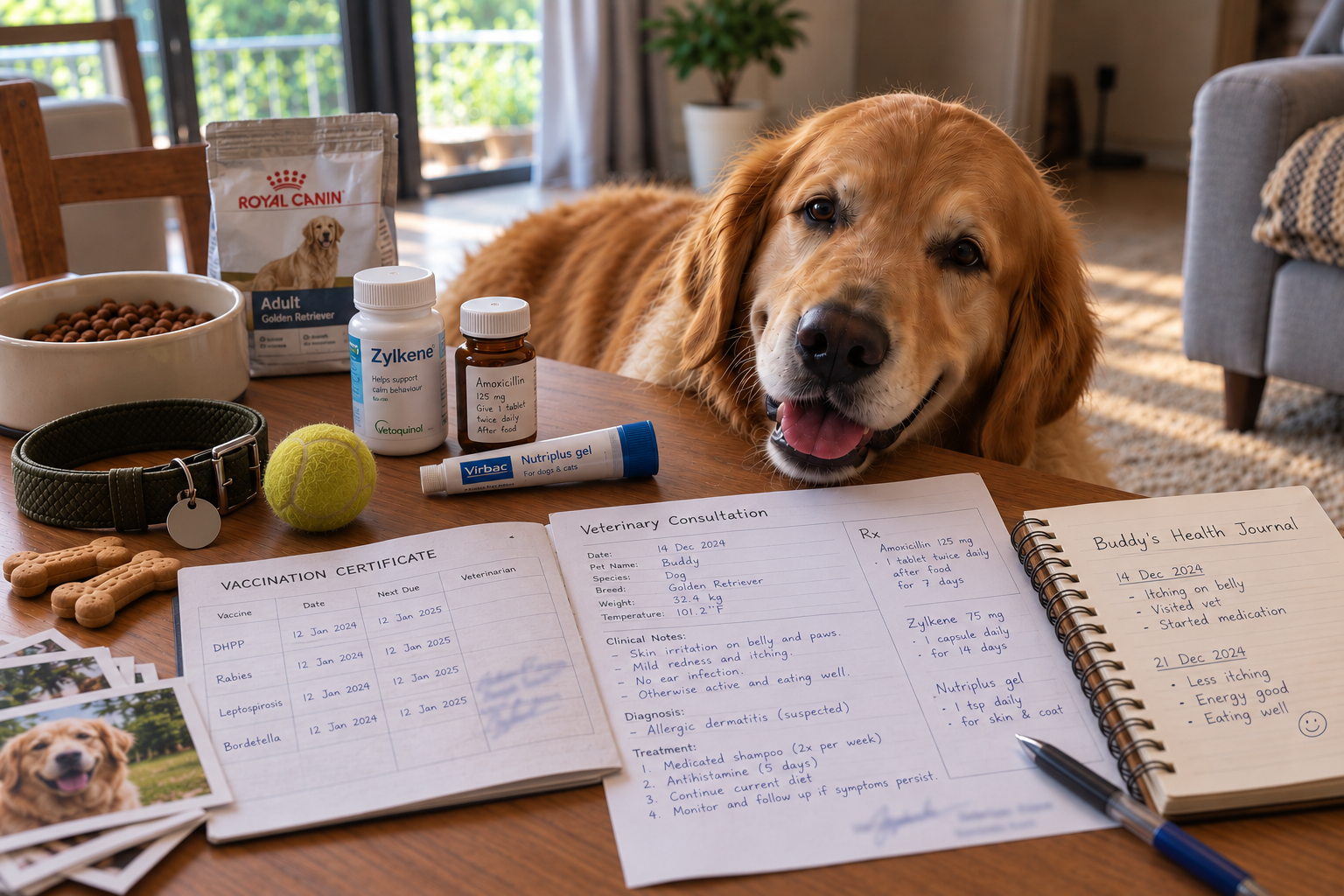
A vaccination record might be sitting in a drawer. A vet prescription could be buried somewhere in your phone gallery. A previous health report may be sitting in an email. Photos showing a skin problem might be mixed in with hundreds of other pictures.
And when something changes, you may find yourself asking:
- “When did this start?”
- “Was it worse last week?”
- “What medication did the vet prescribe last time?”
- “When was the last vaccination?”
- “Do I have a photo of how it looked before?”
This is the problem with managing pet health today.
The information exists. It is just scattered.
And as pets become an increasingly important part of our families, pet parents need a better way to understand, track, and organize their pets’ health information.
Pet health is more than a visit to the veterinarian
Veterinary care is an essential part of keeping a pet healthy. But your pet’s health doesn’t begin when you walk into a veterinary clinic.
It is happening every day.
Your dog may develop a small patch of irritated skin. Your cat may start drinking more water. Your pet’s activity may gradually decrease. Their coat may look different. Their eating habits may change.
Some changes are harmless. Others may be worth discussing with a veterinarian.
The difficult part for a pet parent is knowing what has actually changed.
Veterinary organizations emphasize the importance of preventive care and the pet owner’s role in understanding and monitoring their animal’s health. The American Veterinary Medical Association describes pet owners as an important part of the healthcare team and encourages them to educate themselves, understand preventive care, and work closely with their veterinarian.
AAHA likewise emphasizes that regular wellness care helps establish a baseline for a pet and allows veterinarians to identify changes over time.
That idea of “over time” is important.
Because one photo, one observation, or one vet appointment only tells part of the story.
A timeline can tell much more.
Why keeping track of your pet’s health matters
Imagine your dog starts scratching. You vaguely remember something similar happening before, but finding the old photos, messages, or treatment details is difficult.
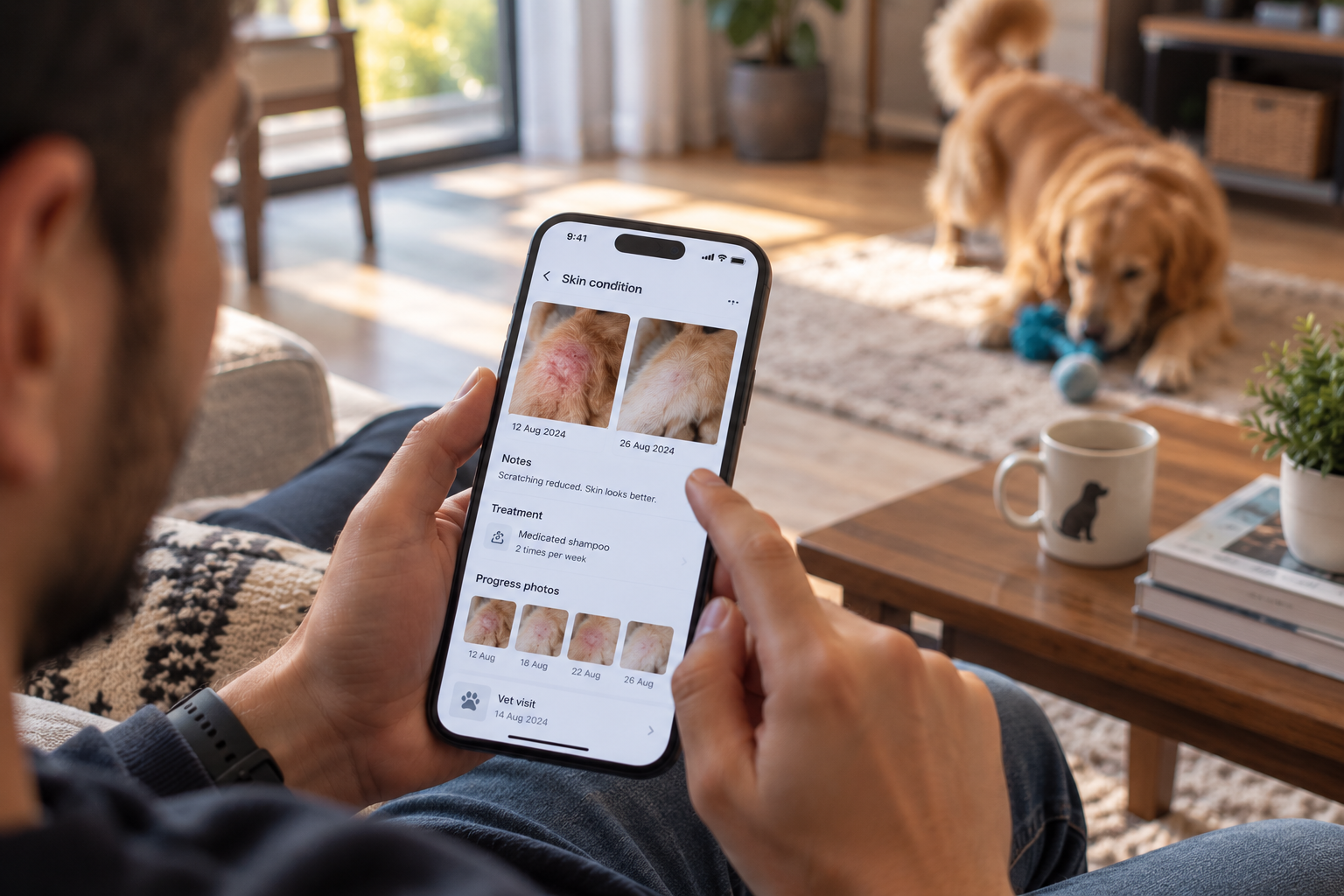
Now imagine opening a health timeline showing:
- Previous photos and observations
- Changes in symptoms
- Recommended treatments
- Before-and-after photos
Suddenly, you have context, not just a memory.
It doesn’t replace veterinary examination or diagnosis, but organized health information can help you better understand changes and become a more informed participant in your pet’s healthcare.
The problem with scattered pet health information
Most pet parents don’t intentionally keep disorganized records. It simply happens.
Your pet’s health information can end up scattered across:
Your phone
Photos of symptoms get buried among thousands of other pictures.
Paper documents
Vaccination certificates, prescriptions, and veterinary reports often end up in folders that are difficult to find when needed.
Messaging apps
Important vet conversations, photos, and treatment instructions can easily get lost in old chats.
Your memory
You may find yourself thinking:
- “I think we gave that medicine last year.”
- “I think the scratching started a few days ago.”
- “I think his weight was around 20 kilos.”
The information exists. It’s just scattered across different places.
What should a pet health record contain?
A useful pet health record doesn’t have to be complicated.
At minimum, pet parents should be able to keep important information such as:
- Vaccination history
- Veterinary visits
- Medications and prescriptions
- Allergies or known sensitivities
- Health concerns
- Weight changes
- Important symptoms
- Photos of visible changes
- Test results and veterinary reports
- Preventive care information
- Notes about behavior or activity
- Important milestones
Veterinary guidance also highlights areas such as vaccinations, parasite prevention, nutrition, weight, dental health, behavior, exercise, and regular examinations as important parts of preventive pet care.
The goal isn’t to turn pet parents into veterinarians.
The goal is much simpler:
Make the information you already have easier to understand and find.
A pet health tracker should show change, not just store information
Saving information is useful. Seeing how it changes over time is even more useful.
One weight reading or one photo of irritated skin doesn’t say much. But seeing how your pet’s weight or skin has changed over several days or weeks makes it much easier to notice what’s really going on.
A good pet health tracker is more than a digital filing cabinet. It helps you see the journey.
Every pet has a health story: the first vaccination, the first vet visit, the medication they needed, the injury they recovered from, and all the ordinary days in between. Bringing health information and memories together into one timeline is the idea behind a pet health and memory journal.
This is where ScanMyPet fits
This is the problem ScanMyPet is designed to address.
ScanMyPet is built around a simple idea:
Your pet’s health shouldn’t be something you only think about when something goes wrong.
The platform combines AI-powered pet health analysis, care guidance, progress tracking, and a health and memory timeline into one experience.
Instead of creating another place where pet parents have to manually enter endless information, ScanMyPet starts with something that pet parents already do naturally:
Take a photo of their pet.
Snap. Understand. Track. Remember.
Notice something unusual about your pet? Instead of trying to describe it with medical terms, start with a photo. ScanMyPet uses AI-powered visual analysis to provide an easy-to-understand health overview across areas such as skin and coat, behavior, activity, and nutrition.
But the journey doesn’t end with the scan. With Care, Track & Remember, you can follow care guidance, check in daily, capture follow-up photos, and compare changes over time.
Why tracking symptoms and changes can make pet care easier
Pets can’t tell us when something started, what makes it worse, or whether they’re feeling better. That’s why tracking changes in their skin, coat, behavior, nutrition, weight, energy, and daily routines can be valuable. ScanMyPet brings these observations together through its AI-powered health, nutrition, skin and coat, behavior, and activity features, making everyday pet care easier to understand and follow - without turning it into a complicated spreadsheet.
What about veterinary care?
This is an important distinction.
An AI pet health app should support veterinary care, not replace it.
Some pet health problems require physical examination, diagnostic testing, laboratory work, imaging, medication, or other professional veterinary care.
AAHA notes that many diseases can begin with subtle signs that aren’t obvious to pet owners, and routine veterinary examinations and wellness testing remain important for detecting and managing these problems.
So the ideal relationship isn’t:
AI vs. veterinarian.
It is:
Pet parent + useful information + veterinarian.
An organized health timeline can help you notice changes, document what you are seeing, and have better information available when you talk to your veterinary team.
From “Something seems wrong” to “Here’s what I’ve noticed”
There is a big difference between these two conversations.
Before tracking
And:
After tracking
The second conversation contains context.
That context can be useful when discussing your pet’s health with a veterinarian.
The American Veterinary Medical Association encourages pet owners to be active participants in their pet’s healthcare and to work with veterinary professionals across areas including nutrition, behavior, weight, exercise, and illness.
A good pet health tracker helps make that participation easier.
Why a pet health app should also remember the good moments
Your pet’s story is about more than health records. It includes their first day home, favorite toys, adventures, milestones, recoveries, and everyday moments you never want to forget.
That’s why ScanMyPet combines health tracking with a Memory Journal, bringing scans, wellness updates, milestones, activities, and memories into one timeline.
Because years from now, you won’t just want to remember their medical history - you’ll want to remember their story.

One place instead of five
Your pet’s health information can easily end up scattered across photos, WhatsApp, paper records, notes, and memory. A modern pet health app can bring these together into one pet profile, one health timeline, and one organized history - making information easier to find, changes easier to compare, and your pet’s journey easier to understand.
The future of pet care is proactive
Pet care often becomes reactive: something happens, you search for answers, and then seek treatment. Technology can help make it more proactive:
Notice → understand → track → care → compare → act when needed.
This doesn’t replace veterinary care. Instead, it gives pet parents better visibility into everyday changes and useful information to share with their veterinarian.
A healthier relationship with your pet’s health
The right pet health app shouldn’t make you worry about every small change. It should replace uncertainty with context - helping you document symptoms, compare progress, find past records, and keep important memories together.
Ultimately, it’s about making pet care simpler, more organized, and more meaningful.
Your pet deserves a health history you can understand
Your pet’s health history shouldn’t be scattered across forgotten documents, photos, and notes. It should help you understand what’s normal, notice changes, stay organized, and follow your pet’s journey over time.
That’s the idea behind ScanMyPet.
Not just a scanner. Not just a journal. Not just a health tracker.
It brings the different pieces of pet care together so pet parents can understand, track, and remember their pet’s health journey.
Because your pet’s health isn’t one moment. It’s a story that unfolds every day.
Start building your pet’s health story
Whether you’re trying to understand a new visible concern, track changes over time, organize your pet’s health information, or simply keep a record of the moments that matter, having one place for your pet’s journey can make everyday pet care feel a little easier.
ScanMyPet is designed to support pet parents with AI-powered insights and tracking. It is not a substitute for professional veterinary diagnosis, examination, or treatment. If your pet has concerning, worsening, or emergency symptoms, contact a veterinarian.
Start Your Pet's Care Journey
One photo can start the journey with ScanMyPet, helping you notice, understand, act, and remember, every step of the way.
Start Your Pet's Care JourneyShare this post